

Availability: 150
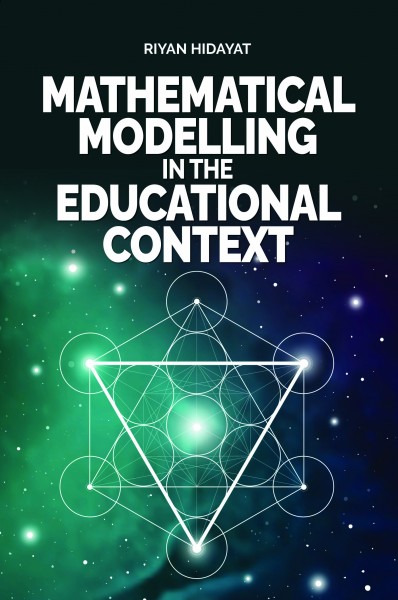
Mathematical Modelling in the Educational Context explores the pivotal role of modeling across science, technology, engineering, and mathematics (STEM), while also highlighting its relevance in economics, business, medicine, and the arts. Beyond its academic scope, mathematical modelling is a tool widely used by policymakers and industries to guide decision-making. In education, however, teachers often face challenges in implementing modelling, particularly in distinguishing between real-world representations and mathematical solutions. This book addresses these challenges by providing actionable insights, case studies, and empirical research that demonstrate how mathematical modelling enhances STEM education and fosters 21st-century skills such as creativity, problem-solving, and critical thinking. Focusing on the Malaysian secondary school curriculum, the book examines the definition, tasks, and processes of modelling, while clarifying its differences from traditional problem-solving. It explores pedagogical approaches through Modelling-Eliciting Activities (MEAs), strategies for assessment, and the conceptual foundations of measurement. Grounded in Realistic Mathematics Education (RME) and the Models and Modelling Perspective (MMP), it also emphasizes the role of metacognition and its link to modelling competency. An essential resource for educators, researchers, and policymakers, this book provides both theoretical foundations and practical tools to advance education through mathematical modelling.
Write a review
Your Name:Your Review: Note: HTML is not translated!
Rating: Bad Good
Enter the code in the box below:
